
Tire & Wheel Guides
Financing a Tire Purchase: What You Need to Know
Financing a tire purchase in Quebec: options, criteria, real costs, and tips for choosing a simple solution that gets you back on the road fast.
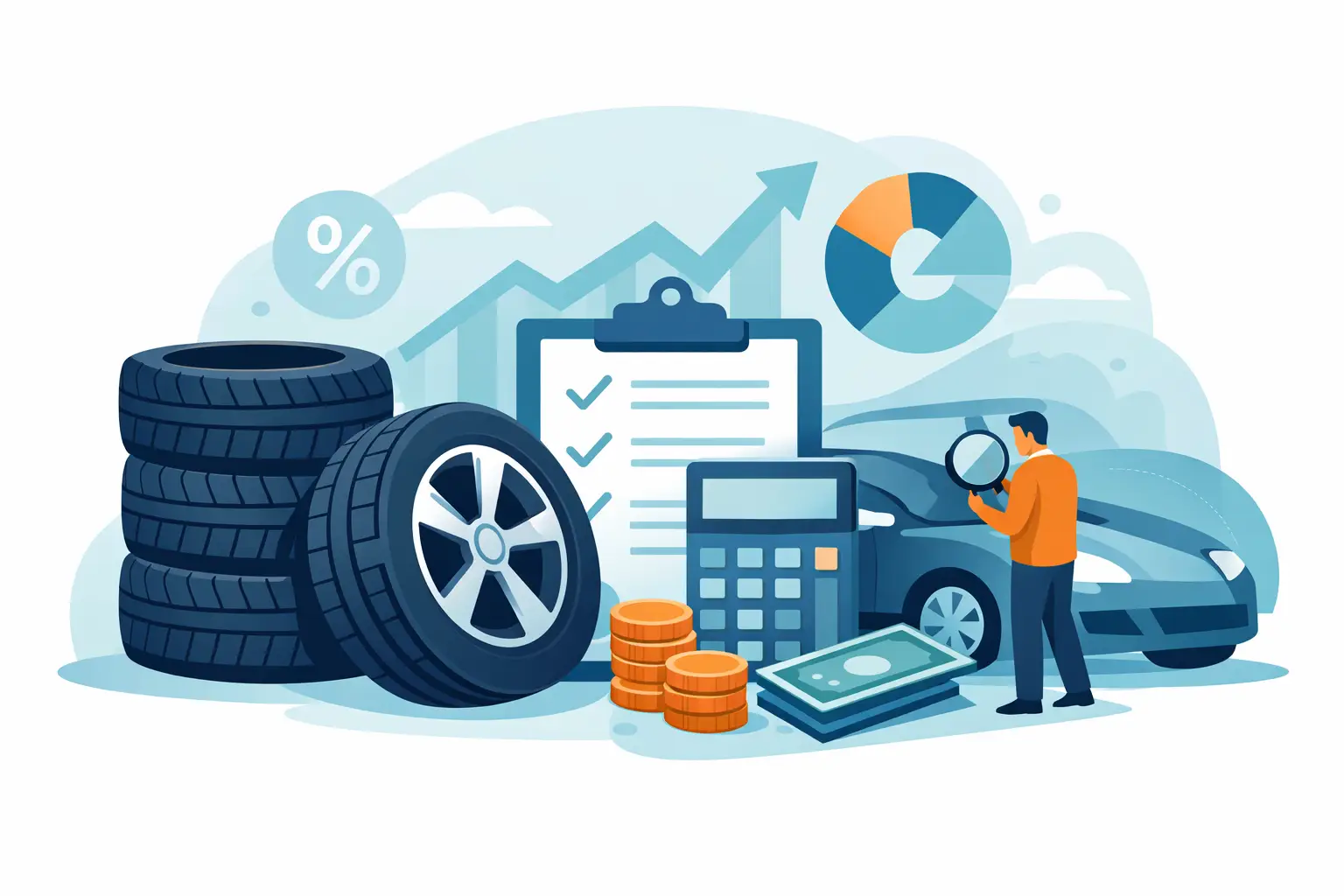
When your tires are at the end of the line right in the middle of the seasonal changeover, waiting a few weeks isn't always an option. That's when financing a tire purchase becomes a real solution: it lets you quickly replace a worn-out set, avoid driving on unsafe tires, and spread the cost out to suit your budget.
In Quebec, buying tires often happens at the worst possible time. Between insurance, routine maintenance, brakes, or a battery that quits without warning, plenty of drivers are looking for a simple way to pay without compromising on product quality. The real question isn't just whether you can finance, but whether the solution you choose actually helps you buy the right tires, at the right time, with a reasonable total cost.
Financing a tire purchase: when it makes sense
Financing isn't just for big luxury purchases. For tires, it can make a lot of sense in very practical situations. That's often the case when a vehicle needs a complete set before winter, when a flat or uneven wear forces a replacement sooner than expected, or when you have to buy the tires, the installation, and sometimes the wheels all at once.
For many drivers, the smart move isn't to put off the purchase, but to avoid one heavy lump-sum expense. If financing lets you quickly install a product suited to your vehicle and how you use it, it can cut down on the kind of compromises you'd otherwise make: buying a lower-performing tire, delaying the install, or hanging on to a set that's already past its prime.
That said, financing isn't automatically the best decision. If you can pay cash without straining your finances, you obviously avoid any credit-related charges where they apply. So the right choice comes down to the total cost, the urgency, and how long you plan to keep the vehicle.
What tire financing actually covers
When people talk about financing a tire purchase, a lot of customers think only about the rubber itself. In practice, the amount you finance can sometimes cover more, depending on the retailer and the solution on offer.
It can cover the purchase of summer tires, winter tires, or all-season tires, but also the wheels, complete wheel-and-tire packages, installation, balancing, valves, rotation, or other services tied to getting you back on the road. In a well-structured buying experience, that's often where financing really earns its keep. You're not just dealing with a product, but a complete, ready-to-roll solution.
This is especially handy for drivers who want to handle the purchase, the installation, and even seasonal storage all in one place. Instead of splitting up the expenses and the appointments, everything is bundled into a single process, which cuts down on wasted time and the risk of mistakes.
The main financing options available
There's no single one-size-fits-all formula. Depending on the retailer, you may come across instalment payments, fixed-term financing, or programs offered through a credit partner. For the customer, the most important difference is the real cost and the flexibility of the payments.
Paying in several instalments over a short period often works well for moderate purchases. It's simple, predictable, and easier to fit into a monthly budget. For a larger purchase—say, a tire-and-wheel package for an SUV or a pickup—a longer term can lower the amount of each payment, but it sometimes raises the total cost.
Certain promotional offers can also be appealing if you understand them properly. Low-interest or interest-free financing for a set period can make sense, as long as you check what happens once the promotional period ends, whether there are administrative fees, and whether penalties apply if you fall behind.
How to weigh the real cost before you say yes
The classic trap is to look only at the small monthly amount. A payment of a few dozen dollars can seem light, but that number isn't what tells you whether the offer is a good deal. What you need to compare is the total cost of the financed purchase versus the price you'd pay in cash.
Start by checking four simple things: the price of the product, the installation fees, the financing rate or charges, and the length of the term. Then look at the total amount repaid. That's the figure that tells you how much you'll really have paid to drive on that set.
You also have to factor in how you use your vehicle. If you choose better tires for improved braking, road holding, and longevity, paying a little more can be the logical call. On the flip side, financing a poorly suited product just because it's available right away doesn't solve anything. The wrong tire wears out faster, performs worse, and can end up costing you more over the medium term.
Financing a tire purchase and choosing the right product
Good financing never makes up for a bad tire choice. Before you start thinking about payments, you need to confirm that the tires are compatible with your vehicle: the right size, the load index, the speed rating, and the type of use. For a driver in Laval or the surrounding area, you also have to account for the realities of Quebec's climate—freeze-thaw cycles, snow, slush, and the ever-changing state of the roads.
Budget often shapes the selection, but it shouldn't make you lose sight of safety priorities. A mid-range winter tire that's well matched to your vehicle will generally be the smarter pick than a model that looks more impressive on paper but is poorly chosen for your everyday driving.
That's where a specialized retailer adds real value. When searching by vehicle, size, and compatibility is clear, you lower the risk of buying a set that needs unnecessary adjustments or that doesn't meet your needs. At Liqui Pneus, this logic is at the heart of the buying experience: quickly finding the right product, then moving on to a friction-free installation.
Who should finance, and who should steer clear
Financing can be a good fit for the driver who needs to act fast without throwing off their monthly budget. It can also help the owner of a newer vehicle who wants to keep good road performance without putting off the purchase until things become urgent.
It's often less worthwhile if you already have the cash on hand and the credit offer adds significant charges. It can also be risky if your budget is already tight to the point where even a small extra payment is hard to absorb each month. In that case, you're better off rethinking the choice of product, the price range, or the scope of the purchase, rather than signing on for a commitment you're not comfortable with.
The other scenario to watch out for is how much life the vehicle has left. If you're driving a vehicle that's near the end of the road, financing a major tire-and-wheel purchase isn't always the best math. It all depends on the vehicle's overall condition, the maintenance coming up, and how long you plan to keep it.
The most common mistakes
The first mistake is financing in a rush without comparing offers. The second is picking the longest term just to lower the monthly payment. The third is overlooking the included services, when a tire purchase rarely comes down to the advertised price of the product alone.
There's also a very common mistake in Quebec: waiting until the last minute before the busy season. When demand spikes, selection narrows, installation slots fill up fast, and the pressure mounts. The result is that you decide faster—and sometimes not as well. Planning your purchase a few weeks ahead gives you more room to manoeuvre, both on the product and on the budget.
Finally, plenty of customers forget to check whether the financing applies to the full cart. Yet it's often the installation, the sensors, the wheels, or small related fees that push up the final bill. It's better to know exactly what's included before you confirm.
How to make a good decision quickly
If you need tires now, the simplest approach is to start from the vehicle and how you actually use it. First confirm the right size and the appropriate season. Then look at the full cost, including installation and any necessary services. From there, compare paying cash with the financed option, focusing on the total amount repaid—not just the monthly payment.
If the gap is reasonable and financing lets you quickly install a reliable set, the decision can be a very logical one. If the total cost climbs too high or the offer lacks clarity, you're better off slowing down a bit and checking the numbers before going any further.
For something as concrete as tires, the right financing is the kind that makes life simpler without complicating the budget. When the product is compatible, the price is clear, and the installation follows quickly, you take care of a real need right away—and you drive off with the essential thing: a vehicle that's ready for the road.