
Tire & Wheel Guides
Steel or Aluminum Rims: Which Should You Choose?
Steel or aluminum rims? Compare price, durability, weight, winter performance and looks to pick the right option for your vehicle and Quebec roads.
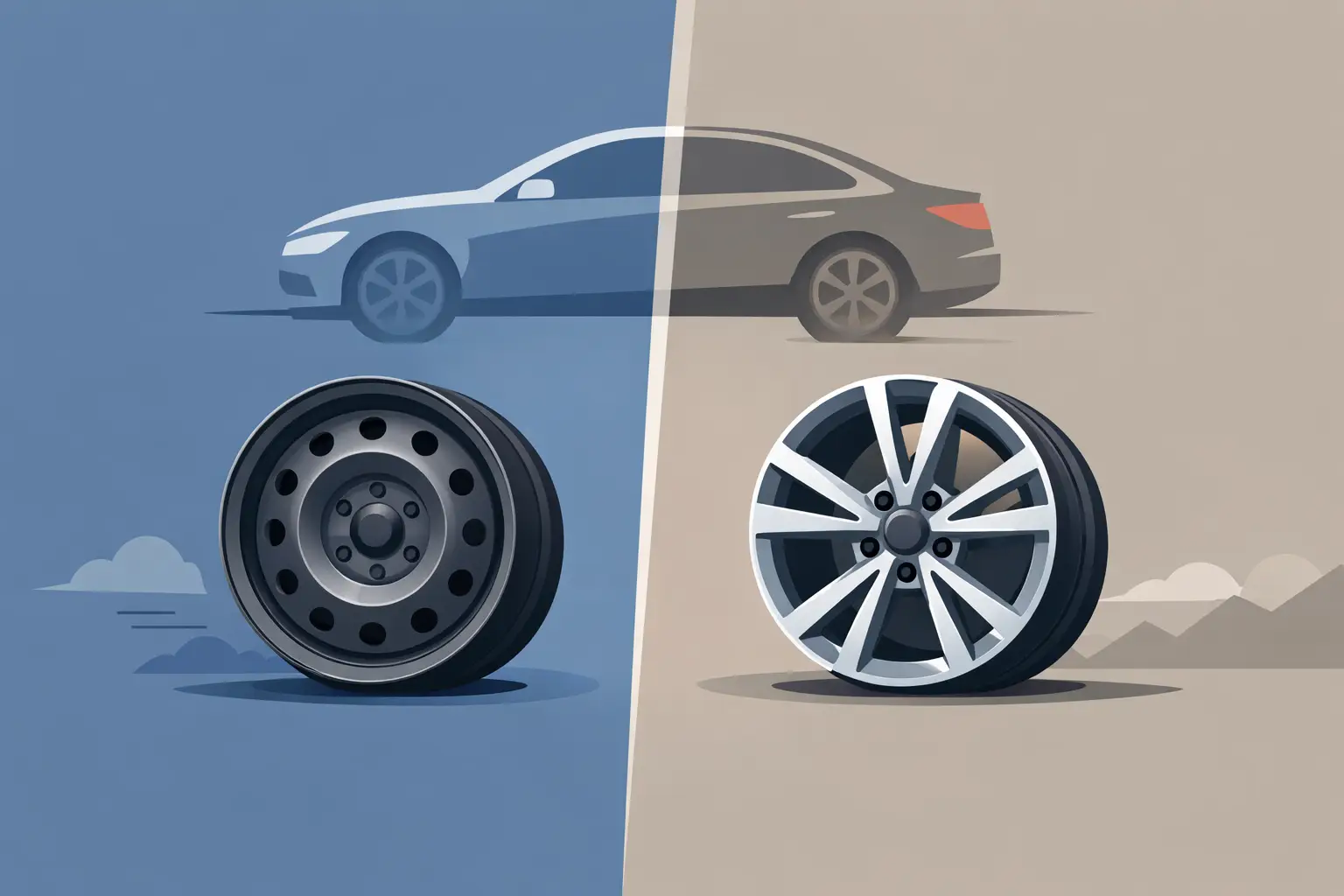
When the time comes to replace a set of wheels, one question pops up fast: steel or aluminum rims? It is not just a styling choice. In Quebec, between the potholes, the road salt, the temperature swings and mandatory winter tires, the material your rim is made of has a direct impact on cost, durability, maintenance and even how your vehicle behaves on the road.
The right choice depends mostly on how you drive. If you are looking for a simple, affordable and practical solution for winter, steel still has the edge. If you want to shave off weight, improve your vehicle's appearance and enjoy a slightly sharper drive, aluminum deserves a serious look. Between the two, there is no universal winner. There is mainly the choice that fits your reality.
Steel or Aluminum Rims: The Real Difference
The best-known difference is the look. An aluminum rim generally has a cleaner finish and a wider range of designs. A steel rim is more understated, often hidden under a wheel cover or left with a utilitarian style. But limiting the debate to appearance would mean missing the bigger picture.
Steel is heavier, simpler to manufacture and generally cheaper to buy. Aluminum, often in the form of an alloy, is lighter and stiffer, which can improve certain aspects of the drive. That lower weight helps the vehicle react faster under braking, during acceleration and through changes of direction, especially on a passenger car.
That said, on the everyday road, most drivers will mainly notice two things: the price at the time of purchase and how the rim holds up to real-world conditions. And that is exactly where the Quebec context matters a lot.
Why Steel Remains a Logical Choice for Winter
For winter use, the steel rim continues to be a very popular option, and that is no accident. It costs less, which lets you mount a second complete set of wheels with winter tires without blowing the budget. For many drivers, that is the deciding factor.
There is also the practical side. In winter, the rim faces slush, calcium, salt and potholes hidden under the snow. A steel rim generally tolerates this rough treatment well. If it takes a hit, it is more likely to bend than to crack. In some cases it can even be straightened, depending on how bad the damage is.
Its higher weight is sometimes seen as a drawback, but in a winter context, many drivers are not chasing fine-tuned performance. They want reliability, a reasonable cost and a wheel that handles tough conditions without demanding much cosmetic attention. On a car used every day for work, school or getting around the city, that is a solid argument.
Steel is not perfect, though. It rusts more easily if the finish gets damaged, and its appearance is clearly more utilitarian. If your vehicle's looks matter to you even in the middle of January, you may find the option a little too basic.
When Aluminum Is Worth the Extra Cost
An aluminum rim usually costs more, but it brings concrete advantages. The first is weight. A lighter wheel reduces unsprung mass, which helps the suspension do its job better and can make the vehicle feel more agile. On some models, that translates into sharper steering and more precise handling.
Aluminum also dissipates heat better than steel. On heavier vehicles, more performance-oriented ones, or vehicles driven harder, that can help around the braking system. For normal city and highway use, it is not always the number-one criterion, but it is a real benefit.
Then there is the appearance. For many owners, especially on recent SUVs, better-equipped sedans or pickups with an appearance package, aluminum blends in better with the vehicle. The designs are more modern, the finishes more varied and the overall visual result cleaner.
Where you have to stay realistic is impact resistance. An aluminum rim can absolutely last a long time, but faced with a major impact, it is more likely to crack than a steel rim. On badly damaged roads, this is worth considering, especially if you often drive with a lower-profile tire.
Purchase Price, Maintenance and Real Cost
If you compare the price tag alone, steel almost always wins. It is the economical option for equipping a vehicle with a secondary set, especially for winter. For a driver who wants an effective solution without paying for style, it often offers the best cost-to-value ratio.
But the real cost does not stop at the starting price. A well-maintained aluminum rim can hold a better visual appeal and sometimes a better resale value. On a newer vehicle, it also protects the overall appearance, which matters to many buyers.
Maintenance is not identical either. Steel calls for vigilance against corrosion, especially if the paint is scratched. Aluminum can also suffer from winter conditions, notably through oxidation or finish deterioration, but it corrodes differently. In both cases, regular cleaning helps. In winter, letting salt build up for weeks shortens the life of any wheel.
Steel or Aluminum Rims Based on Your Driving Style
The best choice often depends less on the vehicle than on the way you use it.
If you mostly do daily commuting, with a lot of city driving, tight parking, rough streets and a budget to watch, steel is hard to beat for winter. It gets the job done, costs less and reduces the stress when conditions get harsh.
If you care about the look, road behaviour and a more premium finish, aluminum makes a more natural case for itself. It is also a common choice for summer, when the roads are kinder and you get more out of its aesthetic and dynamic advantages.
For many drivers in Quebec, the most logical formula is a mix: steel in winter, aluminum in summer. It is not an absolute rule, but it is often the best balance between budget, durability and appearance. You protect your more expensive rims during the most aggressive season, while keeping a more rewarding set for the rest of the year.
Compatibility Matters More Than the Material
You can debate steel versus aluminum at length, but a poorly chosen rim will always be a bad purchase. The priority is always compatibility with the vehicle. The diameter, the width, the offset, the centre bore and the bolt pattern all have to be exact. A wheel that does not match the specifications can hurt brake clearance, road holding or component wear.
You also have to think about load capacity, especially for certain SUVs, pickups and heavier vehicles. A nice-looking rim that does not meet the vehicle's requirements has no real advantage. That is often where mistakes cost the most.
Another practical point: if you plan to alternate between two seasonal sets, a complete mount on separate rims makes life easier. Seasonal changeovers are faster, the risk of damaging the tires during dismounting goes down and you save time at the shop.
What We Recommend in Most Cases
For an everyday vehicle used in Laval or anywhere else in Quebec, with a real winter, the simplest recommendation often stays this one: steel rims for winter if your priority is price, toughness and peace of mind; aluminum rims if your priority is appearance, reduced weight and a slightly more refined driving experience.
If your budget is tight, do not overthink the choice. A good steel set that is properly compatible with your vehicle will do the job very well through the cold season. If you have a recent vehicle and want to preserve its style without sacrificing function, a quality aluminum set can be worth the investment.
There is no bad material in absolute terms. There are mainly different priorities. At Liqui Pneus, the most effective approach is to start from your vehicle, your exact dimensions and your real-world use. That is what helps you avoid mistakes and choose a wheel that is not just good-looking on paper, but suited to your roads, your season and your budget.
Before you buy, ask yourself a simple question: do you want to save money up front, protect a summer set, or improve your vehicle's look and response all year round? The answer usually points you to the right material, without going in circles.