Short answer: a steering wheel that shakes at a certain speed, often on the highway, most often comes from an unbalanced wheel. But a damaged tire, a bent rim, unevenly worn brake rotors or a worn steering part can cause a similar symptom. Poor alignment mainly makes the vehicle pull to one side and wears the tires unevenly. If the vibration is strong, sudden or comes with a noise, slow down and have the vehicle inspected before getting back on the road.
Steering wheel vibration should never be ignored, but it is not always serious. The most useful thing, even before booking an appointment, is to notice when it happens. This guide helps you sort it out; it does not replace an inspection by a technician.
First, when does your steering wheel shake?
| What you notice | Causes to check first |
|---|---|
| Vibration at a certain highway speed, which fades when you go faster or slower | Front wheel balancing, out-of-round tire |
| Vibration mostly in the seat or floor, less in the steering wheel | Rear wheel balancing, damaged rear tire |
| Vibration only when braking, sometimes with a pulsing pedal | Unevenly worn brake rotors |
| Vibration that started after a pothole or hitting a curb | Bulge on a tire, bent rim, lost balancing weight |
| Vibration right after a tire or wheel installation | Balancing or wheel nut torque: have it checked without delay |
| Vibration in winter, after driving through snow | Snow or ice packed inside the rims |
| Vehicle pulling to one side, off-center steering wheel, tires worn on one edge | Alignment, suspension or steering parts |
| Knocking, clunking or play in the steering wheel | Worn steering or suspension parts, loose wheel |
Wheel balancing: the most common cause
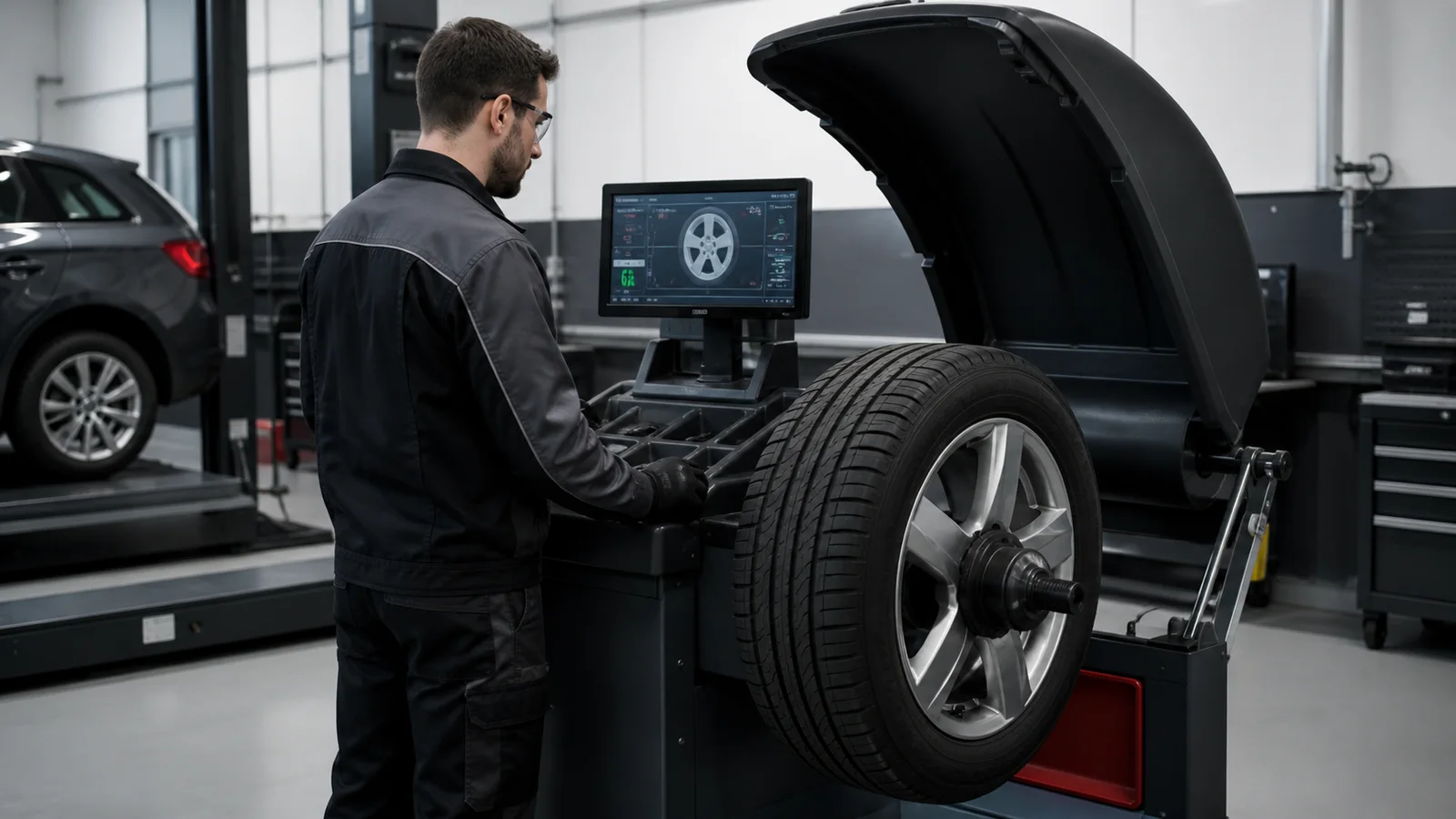
A wheel is never perfectly uniform: the tire and the rim always have a slightly heavier side. Balancing means spinning the wheel on a machine that measures this imbalance, then placing small weights on the rim to offset it. An unbalanced wheel "hops" slightly on every turn, and the vibration travels up to the steering wheel when it is a front wheel.
A wheel can lose its balance when a weight comes off, after an impact or simply as the tire wears. That is why balancing is redone every time a tire is mounted on a rim.
At Liqui Pneus, balancing is included in every tire installation at our Laval shop. If a vibration appears after an installation with us, contact us quickly to have the balancing and wheel nut torque checked. For our prices, read How much does tire installation cost in Laval?
A damaged tire or a bent rim
After a pothole, take a close look at your tires. A bulge on the sidewall means the internal structure of the tire is damaged: such a tire cannot be repaired and must be replaced. Driving with a bulge, especially at high speed, increases the risk of a blowout.
A tire can also wear unevenly, with dips and high spots, or keep a slight flat spot after sitting for a long time in very cold weather; in that case, the vibration often goes away after a few kilometres. A rim bent by an impact causes a vibration that comes back even after balancing. Only checking the wheel on the machine can confirm it.
Shaking when braking: the brakes
If the vibration shows up mainly when you brake, and the pedal seems to pulse under your foot, the brake rotors are often the cause: their surface no longer wears evenly. It is not a balancing problem, and new tires will not fix it.
Your brakes are your first line of safety. Have them inspected without delay: our technicians check pads, rotors and calipers during a brake repair, by appointment from Monday to Friday.
Alignment: it pulls rather than shakes
People often think of alignment when the steering wheel shakes, but poor alignment mostly shows up differently: the vehicle pulls to one side, the steering wheel is no longer straight when you drive straight ahead, and the tires wear faster on one edge. Over time, however, this uneven wear can create vibrations.
At Liqui Pneus, alignment is done during mechanical work on your vehicle, when you leave it at the shop. It is not offered as a stand-alone service.
Suspension and steering: when it knocks or feels loose
Worn ball joints, tie rod ends, wheel bearings or shock absorbers leave play in the steering. The signs: a vibration with clunking over bumps, a steering wheel that feels vague, or a humming noise that grows with speed. These parts directly affect your control of the vehicle.
Our steering and suspension service inspects these parts, by appointment from Monday to Friday.
When should you stop right away?
Some situations cannot wait for an appointment. Slow down, stop in a safe place and have the vehicle inspected before getting back on the road if:
- the vibration appears suddenly and becomes strong;
- you see a bulge, a cut or a puncture on a tire;
- you hear a knocking that follows the rotation of the wheels;
- the vibration started right after a wheel was removed and put back, which can mean loose wheel nuts;
- the steering wheel becomes hard to hold or the vehicle changes direction.
When in doubt, have the vehicle towed rather than driving it: a loose wheel or a damaged tire can fail.
What you can check yourself
- The cold pressure of your four tires, compared with the placard on the driver's door.
- The condition of the tires: bulges, cuts, heavier wear on one edge or in patches.
- The inside of the rims, in winter: packed snow or ice is enough to create a vibration, which goes away once the wheel is cleared.
- When the vibration happens: speed, braking, turning, after an impact. Write it down: it is the best information you can give the technician.
Never slide under a vehicle that is held up only by a jack.
At Liqui Pneus: which appointment should you book?
- Tires to install, new or your own: tire installation in Laval includes balancing each wheel. In season, book a Saturday, 9 a.m. to 4 p.m., until November 28: that day, the shop only does tire installation.
- Vibration when braking, noises, play in the steering: book a mechanical appointment, Monday to Friday, for the brakes or the steering and suspension.
For any question, call us at 450-256-1685 or write to us from the Contact page.
Skip the line, buy online now at www.liquipneus.com. Free, fast delivery in Quebec on the purchase of 4 eligible tires or wheels.
Ready to buy
Ready to order your tires?
Compare the tires available in your size, order online and choose delivery or installation at our Laval shop.
- Free, fast delivery in Quebec when you buy 4 eligible tires or wheels
- Installation by appointment on Saturdays, 9 a.m. to 4 p.m., until November 28
FAQ
Frequently asked questions
Why does my steering wheel shake only on the highway?
Most often, a front wheel is out of balance: the vibration appears at a certain speed, then fades. Also check that no tire has a bulge and, in winter, that no snow is packed inside the rims.
Can poor alignment make the steering wheel shake?
Rarely on its own. Poor alignment mostly makes the vehicle pull and wears the tires on one edge; that wear can create vibrations over time. At Liqui Pneus, alignment is only done during mechanical work, when the vehicle is left at the shop.
My steering wheel shakes when I brake: is it dangerous?
It is often a sign of unevenly worn brake rotors. Have your brakes inspected without delay; at Liqui Pneus, mechanical work is done by appointment from Monday to Friday.
Is balancing included in tire installation?
Yes. At Liqui Pneus, every tire installation includes balancing each wheel.
Can I keep driving with a shaking steering wheel?
If the vibration is light and steady, drive carefully to your appointment. If it is sudden, strong, comes with a noise or a visible bulge on a tire, stop in a safe place and have the vehicle inspected or towed.